
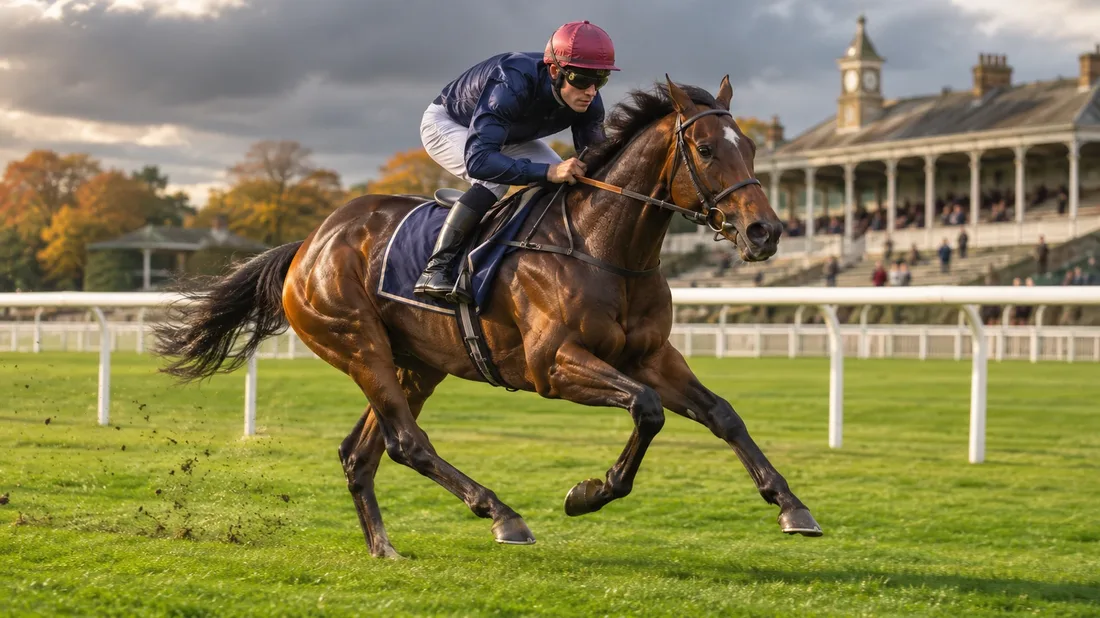
Betfred has declined a three-year renewal of its sponsorship of all five British Classics, blaming successive gambling tax increases and the planned rise in Machine Games Duty. The decision turns a dispute over betting-shop costs into a direct test of racing's commercial funding.
In a statement reported on 5 November, a company spokesperson said the cumulative cost of government policy had left it with “no choice”. The affected races are the 2,000 Guineas and 1,000 Guineas at Newmarket, the Derby and Oaks at Epsom Downs, and the St Leger at Doncaster.
The Jockey Club's Amy Starkey said the organisation understood Betfred's reasons, while expressing disappointment at the decision. It was already talking to prospective partners for its Epsom and Newmarket festivals.
The announcement concerns a proposed renewal. Its importance lies in the future commercial commitment that will no longer be made, rather than an announcement that existing signed contracts have been broken.

How Betfred Became the Classic Bookmaker
Betfred's racing history reaches much further back than its recent sponsorship of the Classics. The business began with a betting shop in Salford in 1967. In 2011, it bought the then state-owned Tote in a £265m transaction, bringing it still closer to racing's betting infrastructure. The pool-betting business subsequently passed to UK Tote Group in 2019.
The modern Classics portfolio came together in stages. Betfred took on the Derby and Oaks in 2023, followed that year by the St Leger Festival. A further Epsom agreement announced in January 2024 expanded the partnership to the two-day Derby Festival and extended it to at least 2026.
Then came the Newmarket agreement, announced in June 2024 and starting in 2025. It made Betfred the first single brand to sponsor all five British Classics simultaneously, bringing together rights held by two separate racecourse groups.
| Racecourse | Classics covered | Racecourse group |
|---|---|---|
| Newmarket | 2,000 Guineas and 1,000 Guineas | The Jockey Club |
| Epsom Downs | Derby and Oaks | The Jockey Club |
| Doncaster | St Leger | Arena Racing Company |
The company also offered a £2m bonus to connections of a horse winning the 2,000 Guineas, Derby and St Leger. That was a conditional sporting incentive, alongside the sponsorship agreements. It drew on the memory of Nijinsky's 1970 Triple Crown to connect races spread across the Flat season into one promotional story.
This was a substantial piece of brand positioning. The Derby dates from 1780 and the St Leger from 1776. Betfred was buying a visible place in that heritage, across the spring, summer and autumn Flat racing calendar.
The withdrawal therefore reverses a strategy assembled over several years. Racing loses the prospect of continued backing from a sponsor that had deliberately brought its biggest Flat racing relationships together.

The Tax Change Behind the Decision
Betfred has identified the latest machine-duty increase as a particular reason for stepping back. The government's detailed policy makes the timing and scope clearer than a general reference to higher gambling taxes.
From 1 April 2027, the government plans to move more machines into the 25% Machine Games Duty category by lowering its stake and prize thresholds. Machines with a maximum stake above £1 or a maximum prize above £100 will qualify, bringing machines currently taxed at 20% into the higher band. Existing lower-stake classifications will retain their current treatment.
HMRC says the policy targets higher-stake and higher-prize games associated with greater gambling harm, while preserving the existing treatment of lower-stake machines. Betfred's argument concerns the effect on the economics of the shops providing those games.
The basic arithmetic is straightforward. For a machine moving from 20% to 25%, £100 of net takings would leave £75 after duty instead of £80, before rent, wages and other costs. That is an illustration of the rate change, not a calculation of Betfred's actual shop profits.

The Racing Post reported Betfred's modelling that 284 of its remaining 1,094 shops would become loss-making under the higher duty. That is a company projection about future profitability. It is not a count of shops already closed, and the underlying model does not provide a public valuation of the Classics sponsorships.
The duty change is still several months away, but sponsorship renewals require decisions now. A bookmaker considering another three years of payments has to assess the income it expects to retain throughout that commitment.

Why the Racing Exemption Does Not Protect Sponsorship
There is a revealing distinction in the tax package. Remote bets on UK horseracing are excluded from the new 25% remote General Betting Duty rate due in April 2027. They remain at 15%, alongside general bets placed in betting shops. The government explicitly recognises racing's separate statutory Levy contribution in preserving that treatment.
That protects a particular category of betting. It does not create a protected sponsorship budget inside a company that also earns money from gaming machines and other products.
A diversified operator allocates spending across the business. A weaker contribution from machines can influence how much it is prepared to pay for a racing festival, even where the tax rate on the underlying horse-race bet has been preserved.
This is the wider significance of Betfred's announcement. A policy aimed at one gambling product can affect commercial spending in a sport associated with another. Assessing racing's exposure therefore requires looking at the businesses that fund it, as well as the duty charged on racing bets themselves.
Sponsorship and the Levy Are Separate Relationships
Racing's financial connection with bookmakers has never rested entirely on naming rights. The Horserace Betting Levy Board was established under legislation passed in 1961, when off-course betting shops were being legalised. Its original purpose included compensating racing for the attendance it was expected to lose as people gained the ability to bet away from the course.
Today, the Levy Board collects a statutory contribution from bookmakers' British horserace betting business and distributes funding in support of the sport. Sponsorship is a separate commercial agreement, purchasing rights and exposure from an event or racecourse.
Declining a sponsorship renewal changes that commercial income. It does not itself end a bookmaker's statutory Levy obligations. Equally, the existence of the Levy does not automatically replace the money a departing sponsor would have paid.
The British Horseracing Authority warned after the October Budget that pressure on betting shops could damage racing's wider income, prize-money and other activities. Its concerns extend beyond the five sponsorships now in the news. Those warnings describe prospective effects across the sport, rather than losses already measured from Betfred's decision.
Keeping these channels distinct matters. The value of withdrawn sponsorship, the effect of any future shop closures and changes in statutory funding cannot simply be added together without checking what each figure includes.

Replacement Terms Will Determine the Financial Impact
The Jockey Club's discussions with prospective partners provide an important next step. They do not yet establish the value, duration or scope of a replacement arrangement.
A new sponsor paying a comparable amount over a similar period could preserve much of the commercial support while changing the name on the race. A shorter agreement, a lower fee or a gap between partners would create different budget pressures. The financial effect depends on the terms ultimately secured.
The two racecourse groups also have their own rights to sell. A successor arrangement need not recreate Betfred's single-brand presence across all five Classics. The commercial appeal of individual events and the appeal of a season-long association are related propositions, with different opportunities for prospective partners.
For racing, prestige remains an asset. It provides history, recognition and a sporting occasion that a sponsor can use to reach an audience. It still has to command a price that both sides can justify.
The Classics will be a useful test of that market. Their ability to attract new partners will show what buyers are prepared to pay for some of the sport's most prominent opportunities. Any successful replacement would still leave organisers needing to assess the position of less visible fixtures elsewhere in the calendar.

Our View: a Funding Warning, with Decisions Still to Come
Betfred's explanation needs to be assessed against the costs it expects to face. The government has announced a specific machine-duty change with an intended start date, and long sponsorship commitments compete with other demands on company money.
The choice of which spending to reduce nevertheless remains a management decision. The phrase “no choice” expresses Betfred's judgement about its priorities; it cannot establish, by itself, that every alternative use of the money had become impossible.
The pattern also reaches beyond racing. In September, Betfred announced that it would not renew its Super League backing after the 2026 season, again pointing to pressure on its marketing budget. A relationship that began in 2017 was being reconsidered alongside the Classics commitments.
Other operators may respond differently. Our recent analysis of Super Group's view of UK consolidation examined how pressure on competitors can create opportunities for a business prepared to invest. That reinforces the need to assess individual spending decisions and business models.
For racing, the lesson is that affection for the sport and a long commercial history offer limited protection when the sponsor's wider economics change. Protecting the tax treatment of racing bets also leaves other routes through which pressure can reach racecourse budgets.
The next meaningful evidence will be the agreements that replace Betfred: what they cover, how long they last and how much support they preserve. Those terms will show how much of this particular withdrawal racing has absorbed, and how much organisers must fund from elsewhere.
Editorial research and analysis by Lucky BetMastermind, with help from ChatGPT.