
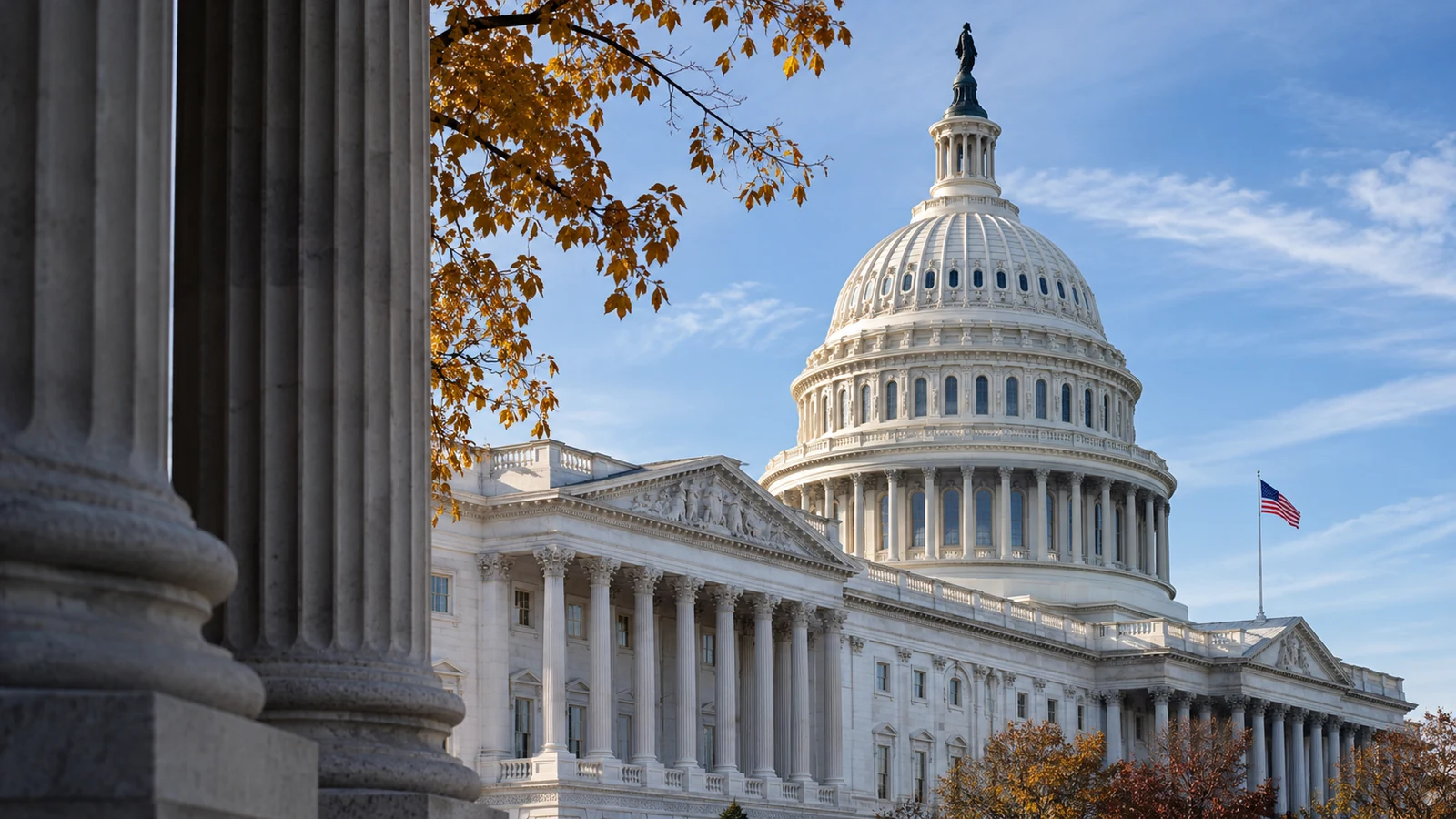
The US Senate passed the DEATH BETS Act, S.4035, with an amendment by voice vote on 19 November. The measure is led by Democrat Adam Schiff of California and Republican John Curtis of Utah.
Congress.gov records that the House received the bill on 20 November. Checked on 23 November, the official tracker still shows Senate passage. The proposal has not become law.
For the industry, the significance lies in the boundary Congress is proposing for event contracts, through which users take positions on future outcomes. The vote advances a particular set of product restrictions while questions about market access and sports contracts continue through other processes.
From a March proposal to Senate approval
 From a March proposal to Senate approval
Schiff introduced S.4035 on 10 March. The original version sought restrictions on war, assassination, terrorism and contracts connected with an individual’s death. Its wording included contracts closely correlated with a death.
Curtis joined as a cosponsor on 30 September, according to Congress.gov. In November, the Senate adopted amendment S.Amdt.7031 before passing the bill.
Those details matter when assessing the legislation. A political announcement establishes the sponsors’ aims; the wording approved by each chamber determines the obligations that could ultimately become law.
What the Senate-approved text would prohibit
 What the Senate-approved text would prohibit
The Senate text would bar CFTC-registered entities from listing or clearing specified event contracts expressly referencing terrorism, assassination, war or US Armed Forces military operations. It also provides for similar activities designated through CFTC rulemaking.
A separate provision covers contracts whose event, at listing, is reasonably expected to resolve principally based on an individual’s death. The proposed duties apply to registered entities and the statutory event-contract category identified in the text.
The death provision therefore directs attention to the event on which a contract is expected to resolve. For exchanges reviewing products, the resolution conditions and underlying outcome would be central to assessing the scope of the proposed restriction.
| Part of the measure | Scope described in the Senate text |
|---|---|
| Actors and contracts | CFTC-registered entities and the statutory event-contract category identified in the bill |
| Expressly referenced activities | Terrorism, assassination, war and US Armed Forces military operations; similar activities may be designated through CFTC rulemaking |
| Death provision | At listing, the event is reasonably expected to resolve principally based on an individual’s death |
| Other activities | Section 3 leaves permissibility outside the new prohibition unaffected; the broader sports-contract disputes remain separate |
Why legislate when a CFTC rule already exists?
Current CFTC Rule 40.11 already restricts event contracts involving terrorism, assassination, war, gaming and activities unlawful under state or federal law. It also provides a review process for contracts that may involve the specified activities.
Schiff argues that an express statutory prohibition would reduce the discretion left to the regulator over the targeted contracts. In his floor remarks, he presented the bill as a response to incentives to profit from violence and the potential use of privileged information.
Placing an obligation in the Commodity Exchange Act would give it a different legal foundation from an agency rule. Implementation and interpretation would still matter, including the commission’s treatment of similar activities under the proposed wording.
For businesses, the practical benefit of a clearer boundary would be greater certainty about product development and compliance. Its effectiveness would depend on the final wording and how consistently the resulting obligations are applied.
S.4035 / DEATH BETS ACT
Senate-approved bill. Received in the House on 20 November 2026. Not enacted as checked on 23 November.Existing rule and regulatory context
 Commodity Futures Trading Commission
Sports-contract litigation remains a separate question
Section 3 says the measure should leave the permissibility of other activities under the existing event-contract provision unaffected, outside the new prohibition.
Schiff explained on the Senate floor that the provision was intended to leave sports-contract litigation unaffected, including whether federal law displaces state gambling rules.
That distinction connects with our earlier coverage of senators challenging the CFTC’s geofencing stance. That dispute concerns access across jurisdictions and the interaction of federal oversight, gambling rules and court orders.
The DEATH BETS proposal addresses a particular product boundary. It supplies no general settlement of which authority governs sports event contracts. Companies assessing their US distribution strategy still need to follow the separate legal and regulatory proceedings affecting those products.
The House and the remaining legislative process
Senate passage is an intermediate stage. Both chambers must agree on a text before it can be presented to the President. House action and completion of the enactment process remain necessary.
The legislative calendar also matters. The Law Library of Congress explains that a bill which fails to become law during the Congress in which it was introduced must be reintroduced in a new Congress and begin the process again.
That makes the next concrete developments House consideration, any further amendments and agreement on a final text. A Senate vote provides evidence of support without guaranteeing when, or in what form, the proposal will become law.

The GambleBallers view
 The GambleBallers view
Our assessment is that clearly defined limits on contracts centred on death and armed conflict are defensible. The public-interest case is strongest when the prohibited outcomes and the responsibilities of exchanges are stated precisely and enforced consistently.
The Senate vote demonstrates that lawmakers can reach agreement on a targeted restriction while larger disputes continue. That is meaningful progress on the issue the bill addresses. The wider market still needs durable answers about regulatory authority, consumer protection and access.
We would assess the next stage through the House’s treatment of the measure and the final text, especially its contract definitions and treatment of other activities. If enacted, the practical test would be whether exchanges apply those boundaries transparently and regulators enforce them reliably.