
Regulation · Netherlands · Impersonation
Fake KSA website used genuine licence names to promote illegal casinos
A counterfeit Dutch regulator website made unlicensed casinos appear connected to genuine licence holders. The case exposes a weakness in superficial licence checks: the company, the casino domain and the source confirming their relationship all need to match.
Contents
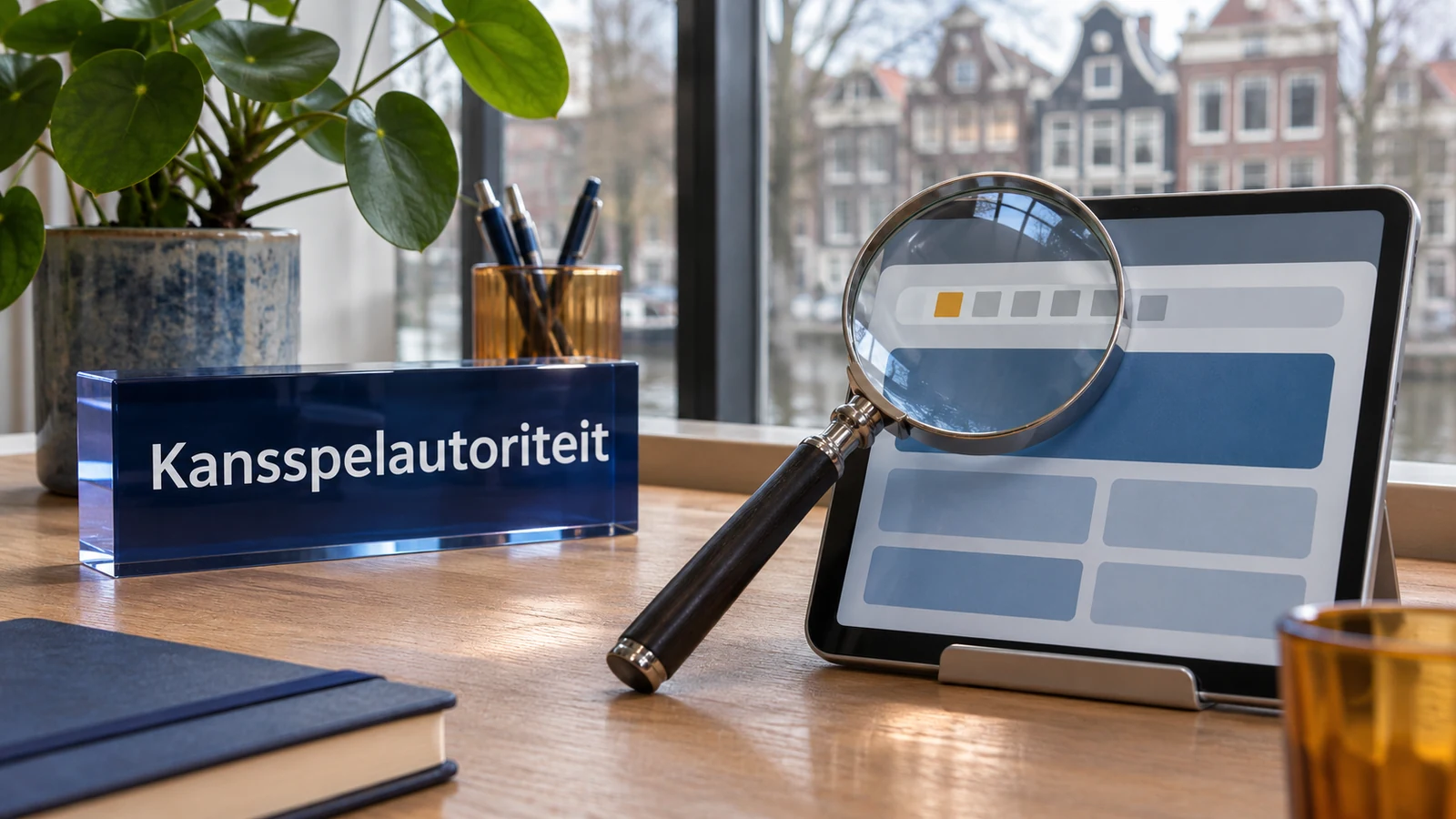
The Dutch gambling regulator Kansspelautoriteit, or KSA, warned on 18 November that criminals had copied its website and placed illegal casinos under genuine licence holders’ names in a counterfeit directory.
On 20 November, NEXT.io reported that the regulator had confirmed the website was taken offline. KSA had previously said it was pursuing removal and had reported the matter to the police and fraud help desk.
KSA confirmed that its real directory had never displayed the incorrect domains. The imitation fabricated a connection between genuine licence holders and unrelated gambling websites.
How the counterfeit directory worked
The copy resembled the authority’s official address and reproduced its public directory, the Kansspelwijzer. It attached illegal offers to JOI I Limited, JOI II Limited and New Future Games B.V.
KSA said that, at the time of its 18 November warning, no legal websites were operating under those licences. External questions about a news report announcing brands brought the issue to its attention. The regulator said it was investigating how the imitation had remained unnoticed.
NEXT.io added that the imitation domain differed from the genuine address by one letter. It reported a registration date of 10 April 2026. Registration establishes when a domain was created; it does not establish that the same content was continuously available from that day.
For a reader, the deception could survive a casual second check. Looking up a company name might confirm that the business and its licence exist, while leaving the claimed casino connection untested.
Why the company names looked convincing
The names had a real regulatory history. KSA’s published decisions show that the separately registered Maltese companies JOI I Limited and JOI II Limited received licence decisions in February 2022. New Future Games received its decision in July 2024.
Those decisions also require operators to notify KSA of the brands, domains and applications used under their licences. A genuine company name therefore supplies only part of the information needed to establish who is behind a particular casino.
A separate announcement makes the distinction especially clear. On 20 November, KSA said it had renewed JOI Gaming Limited’s licence for Jacks.nl. JOI Gaming is a different legal entity from JOI I and JOI II, although KSA’s 2022 announcement placed them in the same group. Their names and permissions should be kept separate.
New Future Games has also issued its own warning. Its official company website, checked on 22 November, says the business is not yet live and directs readers to official channels for its launch status. NEXT.io reported that chief executive Paul van Dun confirmed the accuracy of the regulator’s account.
The licensed companies are the identities being misused in this story. The KSA warning does not identify them as the operators of the counterfeit website.
What the official check needs to establish
KSA’s English guidance tells consumers to search its register using a company name, website, app or licence number. The useful result connects the actual gambling destination to the appropriate licence holder.
Its operator guidance explains how that connection is maintained. Licence holders must notify KSA of new or discontinued brands, domains and apps; new or changed information is published through the Kansspelwijzer, and discontinued names are removed. The authority warns that late notification can misinform consumers and service providers.
| Check | What it establishes | What remains to be verified |
|---|---|---|
| Genuine licence decision | A named entity received an authorisation on stated terms | Whether the casino being promoted belongs to that offering |
| Exact domain in the official directory | The website’s published connection to the licence holder | Whether the browser is still visiting that exact destination |
| Authentic regulator address | The source is the authority’s website | The contents of the relevant listing and its current status |
Our practical recommendation is to begin at the regulator’s genuine homepage and open the directory from there. A badge, screenshot or link supplied by a promotional page should prompt verification of the destination and its entry. This remains a check of authorisation for the Dutch market.

The commercial damage can extend beyond one website
For legitimate operators, identity misuse creates a reputational risk. A customer who mistakes an unrelated casino for a licensed brand may later direct complaints at the company whose name appeared on the imitation. That is a foreseeable consequence of the mechanism, rather than a measured loss disclosed in this case.
New Future Games says it responds to misuse of its name and licence number through takedown requests and intellectual-property complaints to relevant intermediaries. Its notice illustrates the additional work genuine licence holders may face when third parties borrow their identity.
The case also belongs alongside our report on VNLOK’s call for action over Meta gambling advertising. Both concern how unauthorised offers acquire apparent credibility and reach potential customers. VNLOK’s separate campaign concerns platform controls; this case adds regulator impersonation to the wider problem.
Gamble Ballers’ view: verify the relationship
Our view is that the weakest licence check asks only whether a familiar name or number is genuine. The stronger check establishes the relationship between the legal entity, the website receiving the customer and the authoritative record. Copying one valid detail should not be enough to validate an unrelated offer.
That matters for publishers as well as players. Coverage announcing a new casino can give an unverified connection credibility beyond the original promotional page. Editors should trace the domain to the official listing before presenting a brand as licensed, and correct an error wherever the claim has travelled.
The reported removal is useful progress. We would judge the broader response by how quickly misleading references are corrected and whether the same claimed identities reappear elsewhere. A single takedown cannot answer those questions.
For licensed businesses and regulators, the aim should be a verification route that is easy to recognise and easy to use. The value of a genuine licence depends partly on people being able to distinguish the authorised offering from someone else’s imitation.
Sources and evidence
KSA warning, 18 November 2026; NEXT.io, 20 November 2026; KSA licence decisions for JOI I, JOI II and New Future Games; KSA announcements of 15 February 2022 and 20 November 2026; KSA register and operator-notification guidance; New Future Games official company notice. Checked 22 November 2026.