
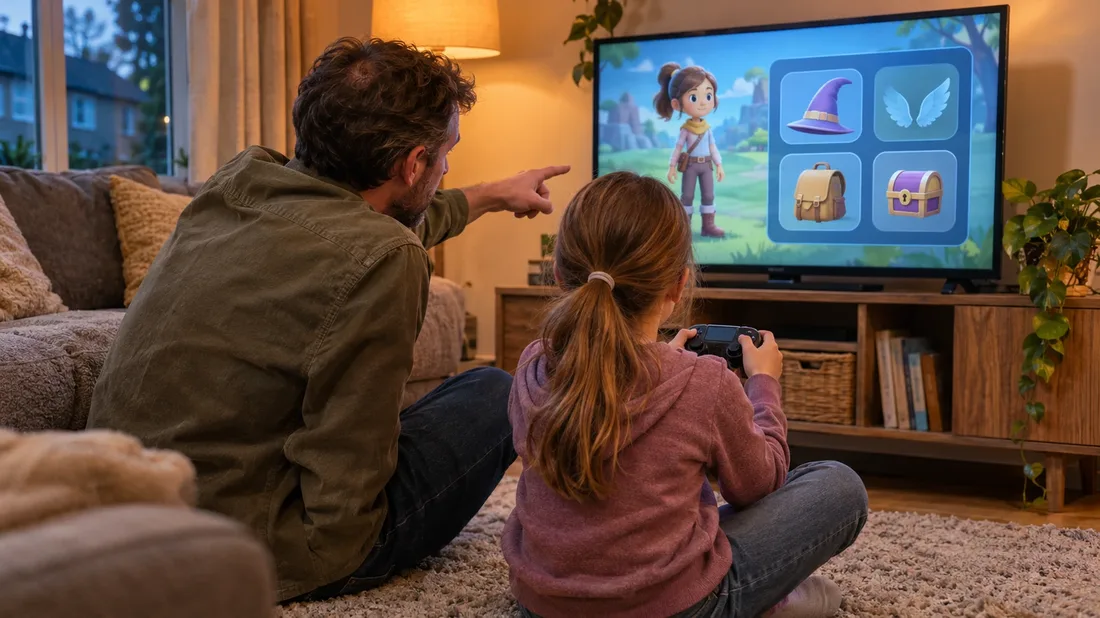
Researchers preparing a major study of loot boxes in children’s video games have set out how they intend to investigate the development of purchasing habits, expectations and attitudes towards virtual possessions, bringing a more detailed research agenda to Britain’s long-running debate over gambling-like game design.
In an interview published by Gambling Insider on 9 November, Lancaster University’s Dr Calum Hartley and Edge Hill University’s Dr John Shaw described plans to combine repeated observations of children and caregivers with controlled experiments involving virtual items.
The Economic and Social Research Council-funded project is worth more than £900,000. Lancaster announced the award on 15 June; Edge Hill’s September announcement said the three-year project was due to begin in January 2027. The latest interview explains the intended approach. It does not report completed findings.
That distinction matters because the question is more demanding than whether a loot box resembles a gambling product. The researchers want to understand how engagement develops while children are still learning what things are worth and how uncertain rewards work.

What children are buying
An in-game purchase can involve a known item: a particular outfit, character or other virtual possession offered at a stated price. A paid loot box introduces uncertainty about what the purchaser will receive.
The commercial difference is substantial. The appeal can involve the possibility of obtaining something rare or socially desirable, alongside whatever enjoyment or usefulness the eventual item provides. The value a child assigns to it may depend on friends, ownership and status within the game.
An item can therefore matter intensely to a player without being convertible into cash. That is one reason the developmental question needs to be examined separately from the legal treatment of the prize.
It also makes careful definitions essential. Opening a reward earned through play, purchasing a known item and paying for a random reward are different activities. Research that groups them together could miss which part of the experience influences a child’s choices.
The same applies to outcomes. Enjoying a surprise, spending frequently, feeling pressure to purchase and experiencing a measurable adverse effect are different observations. A useful study needs to show how they relate, rather than treating them as interchangeable evidence of harm.

The evidence gap is about development
Concern about loot boxes predates the new project. A 2018 PLOS ONE study by David Zendle and Paul Cairns surveyed 7,422 gamers and found an association between loot-box expenditure and problem-gambling severity.
That study could not establish whether loot-box purchasing contributed to gambling problems, whether people already experiencing those problems spent more on loot boxes, or how other influences affected the relationship. It also did not follow primary school children as their engagement developed.
The distinction was recognised in the government’s July 2022 response to its call for evidence. Ministers acknowledged an association between loot-box spending and problem-gambling behaviours while noting that the evidence had not established a causal relationship.
The new project addresses a related but more specific gap: how younger children encounter these systems, how their engagement changes and whether that change predicts differences in their development or wellbeing.
A finding among an existing group of gamers cannot answer all those questions. Understanding a child’s trajectory requires observations taken before, during and after relevant changes in behaviour.

Why the research design matters
Hartley and Shaw describe plans to follow the same children across five assessment points over two years, including children as young as five. They will compare children’s accounts with caregiver reports and examine other influences, including existing wellbeing, overall gaming and family circumstances.
They also plan controlled tasks using unfamiliar, generated avatar items to investigate how children value virtual possessions and respond to features such as rarity.
The methods serve different purposes:
| Approach | What it can help establish | What it cannot establish by itself |
|---|---|---|
| Repeated observations of the same children | Which changes occur first and how engagement develops | That every other influence has been excluded |
| Child and caregiver reports | Different perspectives on the same activity | Which account is accurate whenever they disagree |
| Controlled virtual-item tasks | The effect of a particular manipulated feature on choices within the task | The long-term effect of a commercial game on a child’s life |
Following children over time strengthens the evidence about sequence. Comparing a child with their earlier responses can also reduce some of the differences that complicate comparisons between separate groups.
It does not make the study immune to alternative explanations. Family circumstances and gaming environments can change between observations. Participants may also leave the study, and those who remain may differ from those who do not.
The experiments offer another way to examine a proposed mechanism. If changing an item’s apparent rarity changes its valuation under controlled conditions, that helps explain a choice within that setting. Connecting the finding to real-world spending or wellbeing still requires further evidence.
The strength of the programme will lie in whether these different approaches support a coherent explanation, including results that complicate the initial expectations.

Parents’ knowledge is part of the question
The plan to collect information from children and caregivers is especially relevant to policies that rely on parental oversight.
A caregiver may know what has been charged to an account while understanding less about what a particular purchase meant within the game. A child may recognise virtual items and peer pressure while having an incomplete understanding of their monetary cost.
Neither perspective supplies the whole account. Differences between them are worth investigating, rather than automatically treating one as the correct measure.
The project’s announced charity partners include Ygam, Internet Matters and ADHD UK. Practical resources for families are among its intended outputs, alongside evidence that could inform policy.
Our view is that such resources will be more useful if they explain the purchase process itself: what is known before payment, what remains uncertain and how the child understands the exchange. A generic warning about excessive screen time would address a much broader issue.

Neurodivergence should be investigated without assumptions
Hartley and Shaw also want to examine differences involving autistic children and children with ADHD, including possible protective factors. In the interview, they explicitly describe greater vulnerability as something to test, rather than assume.
That is an important discipline. Differences in gaming time, interests or responses to virtual ownership cannot simply be converted into a finding that every child within a diagnostic group faces the same risk.
The relevant evidence would concern particular children, their exposure to particular mechanics and the outcomes observed. Variation within a group may be as consequential for designing protection as an average difference between groups.
Safeguards need scrutiny on that basis too. A control that works reasonably well for an average participant may perform differently for children whose circumstances, understanding or engagement differ. Demonstrating that difference requires data, with an honest account of uncertainty.


Britain’s legal boundary has never been a safety certificate
The Gambling Commission explained its position on loot boxes in 2017. A key question was whether an item obtained through chance amounted to money or money’s worth. Items confined to a game and unavailable for cash-out were unlikely to fall within licensable gambling activity.
The same explanation distinguished that position from enforcement involving FutGalaxy, a separate service providing gambling linked to game items and currency. The regulator had already pursued a criminal prosecution in that case.
The boundary therefore depends on how a product functions. A paid random reward within a closed game environment and a service allowing wagering with items that have realisable value require different analysis.
Paying real money into a game does not, on its own, settle the legal status of everything bought inside it. Equally, an activity falling outside gambling licensing does not establish that its design is harmless to children.
The Commission itself recognised that parents’ concerns extend beyond the statutory definition. The new research could help explain what protection needs to address where gambling law is not the applicable route.

Britain has already tried other forms of protection
The policy history includes interventions outside gambling licensing.
In July 2022, the government called for children’s access to paid loot boxes to require parental or guardian approval, alongside spending controls and better information. In July 2023, games industry body Ukie published 11 industry principles, including technological controls intended to restrict under-18 access without parental consent or knowledge.
Those principles were an industry-led approach. Their publication was not evidence that every game had implemented an effective control or that children’s outcomes had improved.
Advertising requirements provide a more immediate example. In a 26 February 2026 enforcement notice, the Advertising Standards Authority and Committee of Advertising Practice addressed relevant mobile-game listings on the Apple App Store and Google Play Store.
The notice says consumers should be told prominently before downloading or purchasing that a game contains paid loot boxes. A generic statement that it offers in-app purchases is unlikely to make the random-purchase element sufficiently clear. The notice set 26 May as the start of active monitoring, followed by targeted enforcement where needed.
That is a concrete transparency requirement. It also answers a narrower question than the developmental study. A clear label can help identify what a game sells; research is still needed to understand how children respond to the system after encountering it.

Our view: test the protection as carefully as the product
The strongest contribution of this project would be evidence connecting specific features with specific outcomes. That would make it easier to assess which changes to a purchase system or its controls actually help children.
For publishers, platforms and policymakers, the test should extend beyond the existence of a disclosure, settings menu or parental approval screen. The relevant questions include whether families understand the information, whether the control works under normal use and what changes in children’s experiences as a result.
A parental permission mechanism and a child’s understanding of uncertainty are related issues, but they are not the same measure. Likewise, reducing one form of purchasing would need to be examined alongside any movement towards another spending mechanism.
Our coverage of Britain’s new independent gambling review considered the wider need to judge reforms through evidence of their effects. This separate university project offers a practical example of the work needed before broad policy claims become persuasive.
There is no need to wait for its results to apply existing advertising standards. Its eventual findings should, however, guide claims about developmental effects and the design changes most likely to improve outcomes.
The research is due to start in January. The useful promise in the latest interview is an attempt to investigate how engagement develops, with room for the evidence to challenge the researchers’ expectations. Publishers and policymakers will need to use its findings with the same precision: identify which features raise concern, who is affected and whether a protection improves their experience.
Sources and evidence
- Gambling Insider, Do Loot Boxes Shape How Children Grow Up? Researchers intend to find out, interview with Dr Calum Hartley and Dr John Shaw, 9 November 2026. Research methods and stated aims are plans described in the interview, rather than findings from a completed study.
- Lancaster University, Award to research how children’s psychology is affected by video game “gambling”, 15 June 2026. ESRC award, project duration, collaborators and intended outputs.
- Edge Hill University, Edge Hill part of major £900,000 study into gambling-like mechanics in children’s video games, 8 September 2026. January 2027 planned start and charity partners.
- David Zendle and Paul Cairns, Video game loot boxes are linked to problem gambling: Results of a large-scale survey, PLOS ONE, 21 November 2018, with the correction published 14 March 2019. The correction removes an inapplicable sentence about variance from the conclusions; that statistic is not used here.
- Gambling Commission, Loot boxes within video games, published 2017, subsequently updated. Legal boundary, limits of the Commission’s powers and the distinction from FutGalaxy enforcement.
- Department for Digital, Culture, Media and Sport, Government response to the call for evidence on loot boxes in video games, 17 July 2022. Research assessment and policy objectives.
- Ukie, New loot box principles agreed by industry, 18 July 2023. Industry-led principles, including parental controls.
- Advertising Standards Authority / Committee of Advertising Practice, Enforcement Notice: Disclosure of loot boxes in app stores, 26 February 2026. Scope, prominent disclosure and the 26 May monitoring date.