
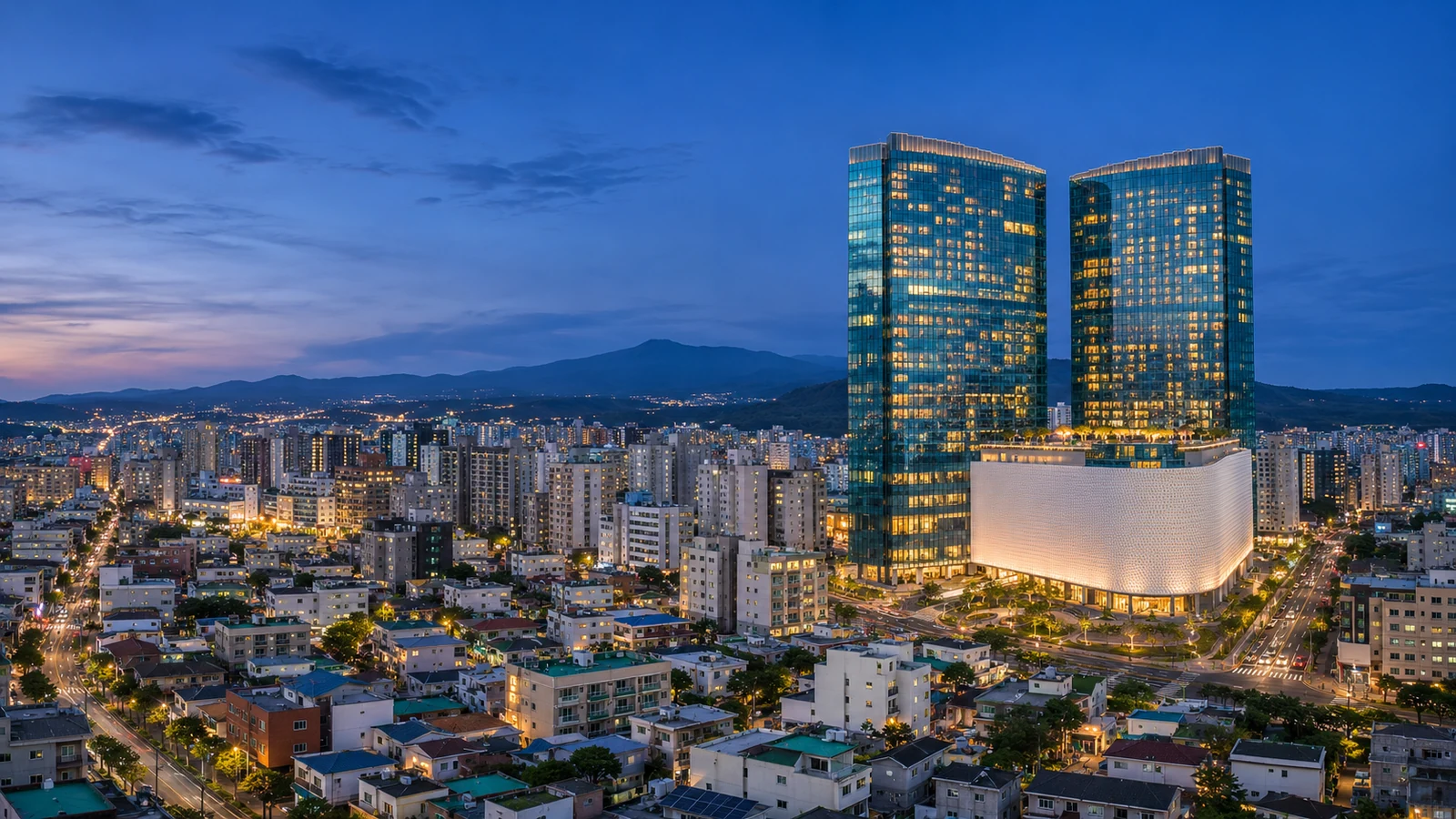
Lotte Tour Development has approved KRW40 billion of short-term borrowing to help redeem convertible bonds connected with Jeju Dream Tower. Its 20 November filing identifies KRW35 billion of outstanding series 8-1 principal, with the bonds maturing on 29 November.
The decision comes after strong October casino trading. It also shows why a resort’s operating performance and its financing need to be assessed together: sales develop month by month, while debt repayments fall on specified dates.
The repayment bill and the new borrowing
 The repayment bill and the new borrowing
The board minutes put the cash required for principal and interest at KRW44 billion. The financing is a subordinated loan, with an annual interest rate of 9%. Signing was planned for 25 November, and repayment is scheduled for 30 May 2027, moving to the following business day where necessary.
The minutes name a securitisation lender, with Shinhan Bank as agent. The main filing classifies the borrowing as coming from outside financial institutions.
The amounts describe different parts of the transaction:
| Measure | Amount |
|---|---|
| Outstanding bond principal | KRW35bn |
| Principal and interest required for redemption | KRW44bn |
| New borrowing authorised | KRW40bn |
The published decision does not set out every source of cash for the redemption. Approval also precedes the planned signing date. The next evidence would be completion of the financing and repayment of the bonds.
Once completed, the arrangement would help meet the November obligation while creating a further maturity roughly six months later. The company gains time, accompanied by a financing cost and another deadline.
A resort built over several years
 A resort built over several years
Jeju Dream Tower’s hotel business has a longer history than the latest financing announcement. In August 2017, Hyatt announced a management agreement with Lotte Tour Development for a Grand Hyatt hotel in Jeju City. Hyatt subsequently announced the opening of the 1,600-room Grand Hyatt Jeju on 18 December 2020.
The complex now includes the foreigner-only Dream Tower Casino. A property combining a large hotel, gaming and other facilities has continuing demands on its resources, including staffing, maintenance, marketing and investment in the guest experience.
Maintaining that operation while servicing its financing is a continuing task. The relevant cash has to be available at the borrower when each obligation falls due.
Borrower
 Lotte Tour Development
Resort context
 Jeju Dream Tower / Grand Hyatt Jeju
What October’s revenue actually measures
 What October’s revenue actually measures
Lotte Tour’s preliminary monthly disclosure records consolidated net casino revenue of KRW62.526 billion for October, up 24.1% year on year. The company explains that this measure deducts items such as contractual agent commissions from gross gaming revenue.
The same disclosure records hotel revenue of KRW6.714 billion, down 9.2% from October 2025. The operating picture therefore varies across the resort’s activities, even in a record month for the casino.
Those figures describe revenue. The monthly release supplies no measure of cash available for this bond repayment.
Assessing that availability requires the wider cash-flow picture: operating costs, interest, taxes, capital spending and the timing of receipts and payments. Funds also have to support the business through quieter periods and future obligations.
A strong month can improve a borrower’s position. The effect on debt service depends on how much cash the wider operation retains and how consistently it generates that cash.
The next maturity matters too
The disclosed 9% annual rate makes the cost of obtaining more time visible. The May 2027 repayment date makes the next financing task visible as well. A short-term arrangement needs to fit a credible plan for cash generation, repayment or replacement funding.
We would assess that plan through the remaining maturity schedule, the terms of any further refinancing and the cash the business produces. A single record month offers useful operating evidence; lenders and shareholders also need to understand the commitments that fall due across the year.
The announcement is a decision to arrange borrowing for an approaching repayment. Evidence of execution, together with the treatment of the next maturity, will show how it changes the company’s financial position in practice.

The GambleBallers view
Our assessment is that refinancing an approaching obligation can be a reasonable way to manage a resort’s finances. The case becomes stronger when operating improvement supports dependable cash generation and the new borrowing sits within a workable repayment plan.
Jeju Dream Tower’s casino growth is encouraging. The useful question now is how much of that improvement remains after the costs of operating and financing the business. Hotel performance, capital requirements and the rest of the debt calendar all affect the answer.
We would judge progress through confirmation that the November bonds have been redeemed, a clear account of the new loan’s execution and subsequent disclosures about cash flow and 2027 maturities. That would connect the resort’s commercial momentum with a measurable improvement in its finances.