
Integrated resorts · Japan · Tokyo
Tokyo skips Japan’s 2027 IR round as the scale debate continues
Tokyo will keep studying casino resorts while sitting out the next application round. With national officials resisting immediate changes to facility standards, the decision puts the practical demands of building a Japanese integrated resort back in focus.
Contents
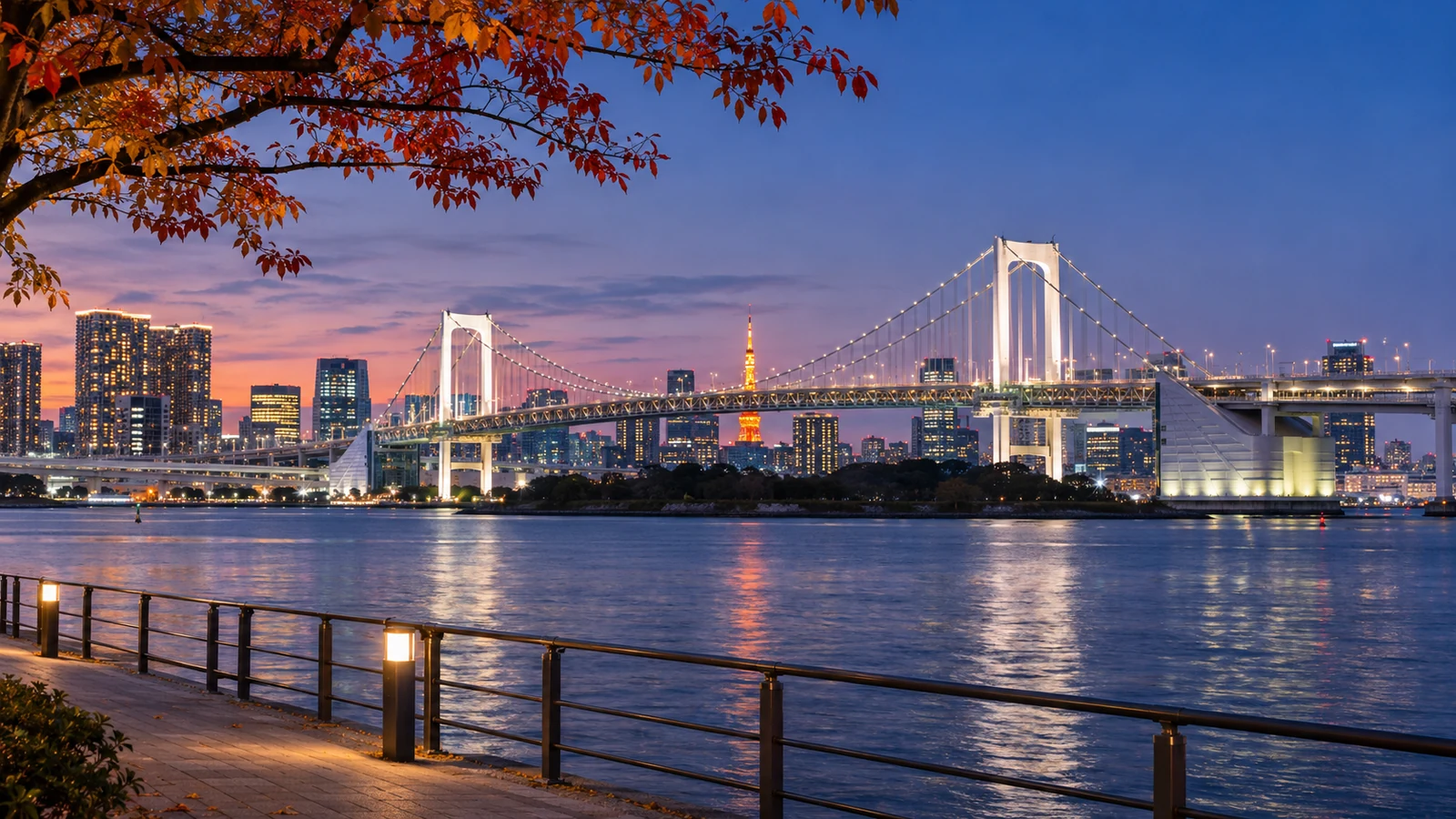
Tokyo has no plan to apply in Japan’s 2027 integrated resort round, Governor Yuriko Koike confirmed at her 20 November press conference. She said the metropolitan government was continuing to assess the advantages and disadvantages of an IR, a tourism complex combining a casino with facilities such as hotels, conference halls and exhibition space.
The capital’s absence from the next round comes as national officials defend the existing development standards. Together, these decisions bring the focus back to a demanding question: what must a region and its private partners be ready to build before Japan’s casino ambitions become an operating business?
Tokyo keeps research on the agenda
Koike’s answer gave a clear position on the next application window while preserving Tokyo’s wider review. The city’s ongoing assessment leaves the possibility of a future proposal open, without committing it to a timetable.
The budget reporting illustrates that distinction. GGRAsia, citing the Mainichi Shimbun, reported that Tokyo’s Bureau of Port and Harbor would omit application-related expenses from its fiscal 2027 budget request while seeking ¥10 million for IR research. The work covers issues including gambling addiction and overseas experience.
That is a proposed research allocation. It supports consideration of a policy, with the much larger decisions about a development partnership, investment and delivery still ahead. Readers should assess Tokyo’s position at that stage of the process.
The 2027 window is for development plans
Japan will accept applications for certification of IR district development plans from 6 May to 5 November 2027. The Japan Tourism Agency announced the new period in March; Aichi Prefecture subsequently confirmed the ordinance had taken effect on 13 March.
Under the national process, a prefecture or designated city prepares its plan jointly with a private operator and applies to the Minister of Land, Infrastructure, Transport and Tourism. The framework permits up to three certified areas. Osaka’s Yumeshima district has already secured one approval.
Those remaining places still require qualifying proposals and national assessment. The application calendar sets a deadline for submitting a development case; securing approval and bringing a casino resort into operation involve further stages.
For prospective partners, local readiness therefore matters alongside the national opportunity. A strategy based simply on the existence of available places would overlook the work needed to produce an investable plan.

Hokkaido exposes the dispute over scale
The debate about the size of those developments was visible at Japan Tourism Agency Commissioner Norio Kimura’s 18 November briefing.
Kimura confirmed receiving a request from Hokkaido Governor Naomichi Suzuki for relaxation of facility requirements, including those for international conference venues. He said immediate changes to certification standards, including facility scale, would be difficult. Both Osaka’s approval and preparations for the 2027 round rested on the existing criteria.
His response points to a policy trade-off. Japan seeks internationally competitive resorts; regional authorities must consider whether the required facilities suit their own demand. Conference and exhibition space needs customers, staffing and operating expenditure alongside the gaming floor.
In our assessment, a large resort can create a stronger tourism offer when those activities reinforce one another. If their demand assumptions are weak, the same scale can increase the capital and operating burden. The commercial question is how each part of the development earns its place in the plan.
Osaka shows the length of the development cycle
MGM Osaka provides a concrete history of that process. ORIX’s original approval announcement records an application submitted with Osaka’s prefectural and city governments on 27 April 2022 and national certification on 14 April 2023. The developer announced the start of construction on 24 April 2025.
| MGM Osaka milestone | Date or current target |
|---|---|
| District development plan submitted | 27 April 2022 |
| National plan certification | 14 April 2023 |
| Construction commenced | 24 April 2025 |
| Opening scheduled | Autumn 2030 |
ORIX’s November 2026 investor presentation continues to show an autumn 2030 opening and initial investment of around ¥1.5 trillion for the project. The opening remains a target, and the investment figure is a project estimate.
On that schedule, more than eight years separate the application from opening. That timespan helps explain why a decision about entering the 2027 round matters well before any new resort could welcome guests.
What Tokyo’s pause means for MGM and suppliers
Our earlier MGM Osaka funding analysis examined the financial commitments that precede opening. Tokyo’s position adds a different perspective: how much preparation is needed before a major city becomes a credible addition to the development pipeline.
For MGM and ORIX, fewer projects advancing through the next round could limit the prospect of later domestic competition. That possible strategic implication leaves Osaka’s construction costs, financing obligations and delivery timetable intact. Tokyo’s participation in 2027 would itself have been only an early step towards a future competitor.
For equipment suppliers, hotel partners and other prospective contractors, our reading is that Japanese market forecasts should distinguish an authority’s interest, a submitted plan, certification and a construction programme. Each offers a different basis for anticipating orders and revenue.
Gamble Ballers view: test demand before promising a destination
We see Tokyo’s decision as a reminder that Japan’s IR expansion depends on regions being ready to commit to the whole resort proposition. The casino may attract attention, but the development case must also explain its tourism role and the facilities surrounding it.
Keeping research active can be useful if it produces clearer choices about demand, location, transport, financing and safeguards against gambling harm. The quality of those answers will matter more than the mere continuation of a study budget.
We also see value in asking whether national scale requirements fit different regional markets. Any case for adjustment should demonstrate how a revised project could deliver the intended tourism benefits with sustainable finances. Smaller dimensions alone would provide an incomplete answer, just as larger buildings alone would.
For the next round, the meaningful developments will be concrete local decisions, operator partnerships and plans ready for assessment under the rules in force. Tokyo has chosen to continue its review. Osaka’s task is to complete construction, meet its financing commitments and open under the present 2030 schedule.
Sources and evidence
Tokyo Metropolitan Government, Governor’s press conference, 20 November 2026; Japan Tourism Agency, 10 March and 18 November 2026, and IR framework updated 9 October; Aichi Prefecture, 31 March 2026; GGRAsia and Asia Gaming Brief, 20 November; ORIX, 14 April 2023 and November 2026 results presentation; MGM Osaka, 24 April 2025. Related Gamble Ballers coverage: 20 November 2026.