
Superbet plans to invest about €500m in its Greek business over six years, combining sports sponsorships with technology, people and marketing as it seeks a leading position in players' preferences.
The plan, described by Greece general manager Giannis Kalambokis in reports published on 5 November, gives substantial financial weight to an expansion that began earlier this year. It also invites a distinction between buying visibility and earning a lasting place in a customer's choices.
Our view is that the strategy has a credible foundation. Sport can introduce the brand quickly, while better software and service can give customers reasons to return. The financial test is whether those reasons remain compelling as introductory promotions give way to the ordinary economics of running the business.

What the €500m Figure Covers
Greek business publication OT reported that the programme includes teams supporting the Greek product from overseas, including England, Croatia, Serbia and Romania. It should therefore be understood as a broad plan supporting the market, rather than spending or job creation confined to Greece.
Within the wider programme, management put signed sports sponsorship agreements at €100m over four years, excluding community initiatives and academies. That describes a more specific set of commitments inside a larger ambition.
The distinction matters when judging how much flexibility the operator retains. A long-term plan can combine contracts already agreed, future operating expenditure and investment that develops as the business grows. The headline alone does not provide the annual payment schedule or establish that every euro has already been spent or irrevocably committed.
Nor should the whole amount be treated as an advertising budget. A payment for rights, a software development team and customer support serve different purposes. They need different measures of success, even when each contributes to the same expansion.

The Greek Move Has a Longer History
Superbet's development predates this launch by many years. Blackstone's 2019 investment announcement traced the business to its founding by Sacha Dragic in 2008 and the start of Romanian online operations in February 2016.
That announcement set out a €175m minority equity investment by Blackstone-managed or advised funds. Technology and international expansion were already part of the stated rationale. The Greek plan follows that longer combination of capital, product development and entry into additional markets.
The corporate identity has changed as well. In December 2025, Superbet Group announced its rebrand as Super Technologies, while retaining its consumer brands. Superbet remains the name players encounter; the wider group has positioned its technology as a foundation for expansion.
By spring 2026, the Greek operation was live. Bragg Gaming's announcement of 30 April described its role supplying games and aggregation for the launch, following the development of an Athens team.
This is expansion into an established competitive environment. Betsson, for example, announced Greek betting and gaming licences in 2021, alongside a locally adapted product and Greek-language support. Such features were already part of rivals' market-entry propositions years before Superbet arrived.
That history raises the standard for the newcomer. Capital can fund an introduction, but competitors have had time to build familiarity and learn what their customers expect. Superbet's task is to make its product sufficiently useful to earn consideration alongside those existing relationships.

A Shirt Deal Opens the Conversation
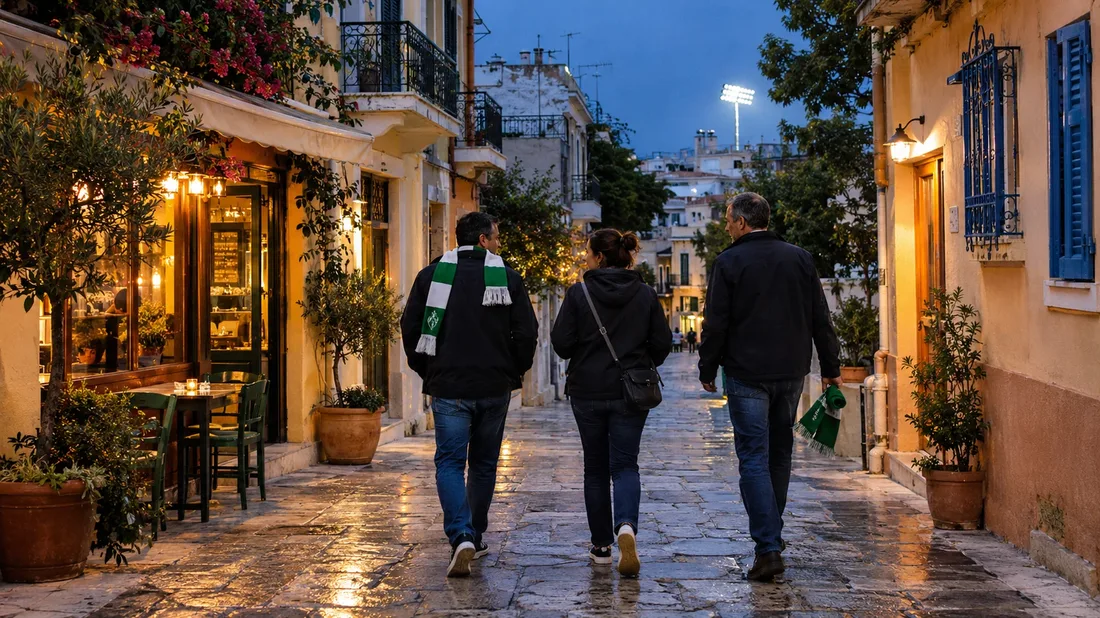
The sporting presence is tangible. Panathinaikos announced Superbet as its principal team and shirt sponsor in April. The November briefing also identified partnerships spanning football, basketball and competitions, rather than a campaign concentrated on one club.
For a new operator, that breadth can create repeated exposure in settings an audience already follows. It can also help establish that the brand intends to remain in the market. A customer may be more willing to consider a name that appears consistently across a sporting season.
The limitation is that recognition does not explain why someone should keep using the service. The next experience might be an awkward registration process, an unclear offer or a support request. Marketing introduces the promise; the operation has to deliver it.
Sponsorship also needs activation. Paying for rights creates opportunities to communicate, but making use of those opportunities can require further production, staffing and media expenditure. A useful assessment must consider the wider cost of turning a partnership into customer relationships.
The commercial question is therefore more demanding than whether supporters have seen the logo. It is whether the resulting customers make a sustainable contribution after promotions and the costs of serving them. That relationship should be examined over time, with protection of vulnerable players included in the assessment.
€270m of Stakes Is a Measure of Activity
Kalambokis reported €270m in October stakes and repeat wagering on the Greek platform, according to OT. Management's reported market-share estimates were also based on wagering activity. These are company figures, rather than an independently established share of revenue.
The distinction is fundamental. The same money can be wagered again after a win, so turnover cannot be read as unique deposits. Nor does it represent the amount the operator keeps after paying winnings.
A simplified illustration helps: €100 of stakes followed by €95 in winnings leaves €5 before other deductions and expenses. That is illustrative arithmetic, not an estimate of Superbet's margin or its Greek product mix.

Taxes, promotional costs, suppliers, payments and operating expenses still have to be considered when moving towards the financial result. Their treatment also needs consistent definitions when comparing operators.
The October number is useful evidence that management is reporting substantial early activity. It cannot establish profitability, customer retention or how quickly the investment will pay back.
Future disclosure would be more informative if it connected activity with revenue after promotions, customer contribution and cash requirements. Those measures would show whether the growth is becoming less dependent on continuing acquisition expenditure.

Technology Is Where the Promise Becomes Practical
Super Technologies' current description of its business emphasises a proprietary betting and gaming platform, trading models and personalisation. For the Greek operation, the potential value lies in how those capabilities affect the service.
An operator with control over development can prioritise local needs and respond to problems without waiting for every change to reach the top of an external supplier's queue. That is an opportunity, rather than evidence that its software is automatically better than competitors' products.
There is also a useful qualification to the ownership story. Bragg's launch announcement described its gaming content and aggregation services supporting Superbet in Greece. Developing proprietary technology can coexist with buying specialist capabilities and content.
The same broader choice appears in our analysis of Kambi's modular betting technology: operators have to decide which capabilities they need to own and which they can obtain from partners. The quality of the combined service matters to the customer.
For Superbet, the practical tests include clear navigation, dependable transactions, responsive support and products suited to local demand. The technical organisation should make those outcomes easier to deliver.
It also carries costs. Development teams, integrations and ongoing maintenance need funding after launch. The commercial benefit emerges when better service supports sustainable customer relationships or improves efficiency enough to justify that continuing commitment.
The Risks Sit in the Timing of the Returns
The central financial risk is a mismatch between the timing of expenditure and the value customers eventually generate. Multi-year sporting commitments can continue through periods when acquisition becomes more expensive or customer activity disappoints.
Competition creates another uncertainty. An entrant's offer can prompt an established operator to improve its own product, promotions or service. That response could make the market more attractive for customers while raising the cost of winning them.
A larger promotional budget would not necessarily solve the problem. If repeat use depends mainly on the next subsidy, the business may be paying repeatedly to sustain activity that generates an inadequate return. Careful analysis needs to distinguish customers who value the service from those responding temporarily to a particular offer.
The opposite risk is cutting support too early. Reducing service or product investment to improve a short-term result could weaken the reasons customers joined in the first place. The six-year horizon gives management room to invest, but it also requires milestones that show whether the strategy is progressing.
Finally, sustainable retention must include the ability to intervene when play becomes problematic. A growth plan should not depend on encouraging unsuitable activity from vulnerable customers. The relevant business objective is a durable, responsibly managed relationship.

Our View: Judge the Business After the Introduction
Superbet's plan is more substantial than a launch campaign. The combination of sporting partnerships, local operations and shared technology gives it several ways to compete. The history of the wider group helps explain why management is prepared to pursue a market over several years.
The early figures deserve attention, provided their meaning remains clear. Wagering activity indicates use of the platform. It leaves open the question of what that use contributes after payouts, promotions and costs.
Three developments would make the case more convincing. First, customers returning because they value the product and service. Second, an improving contribution from those relationships after the expense of maintaining them. Third, evidence that the operation can deliver those results while its safeguards and service standards hold up.
These outcomes need a reporting period long enough to capture ordinary sporting conditions and the effect of promotions. A strong month can be encouraging without establishing the economics of a six-year programme.
The €500m headline shows ambition and the scale of the resources management plans to deploy. The more important evidence will come after the brand has become familiar: whether Superbet can earn repeat business at a cost that makes its Greek expansion worthwhile.