

Sportradar earns revenue by supplying sports data, audiovisual content, betting technology and related services to other businesses. It does not operate its customers' consumer sportsbooks. Instead, it licenses sports rights, captures and processes information, turns that material into products, and sells access or services to bookmakers, media groups, sporting organisations and prediction-market businesses.
Not all of this revenue behaves like a fixed subscription. Clients may pay for service periods, additional matches or a share of gaming revenue. Under some Managed Trading Services agreements, Sportradar also participates in trading losses. Revenue therefore varies with usage, sporting outcomes and contract terms.
The Sportradar corporate overview explains the group itself. Here, the question is narrower: who pays Sportradar, what do they receive, and which commercial risks remain with the supplier?
The value chain, in brief:
Sports leagues and rightsholders → licensed data and video rights → event collection, verification and technology → live feeds, odds, streaming, trading tools and analytics → operators, media companies, leagues and prediction-market clients → contract fees, usage charges or eligible revenue shares.
The arrows represent the flow of content and services, not ownership of clients or sporting bodies.
Where the money comes from

Sportradar's audited FY2025 annual report recorded €1,289.965 million of consolidated revenue. Note 4 divides that total into five product families, grouped under two broader commercial categories. This is a useful view of how the company generates sales, provided it is not confused with five separately reported businesses.
| FY2025 product family | Revenue (€m) | What customers principally pay for |
|---|---|---|
| Betting & Gaming Content | 817.295 | Sports data and odds-related content, streams, virtual sports and other gaming content |
| Managed Betting Services | 229.775 | Managed trading and betting-platform services |
| Marketing & Media Services | 181.568 | Advertising, marketing technology, media and fan-engagement services |
| Sports Performance | 43.692 | Team and league performance, video and analytics technology |
| Integrity Services | 17.635 | Integrity monitoring, intelligence, education and consultancy |
| Total | 1,289.965 | Consolidated revenue, year ended 31 December 2025 |
Source basis: Sportradar's FY2025 Form 20-F, Note 4. Figures are millions of euros, converted from the report's €000 table; sums are exact at the displayed precision.
The first two rows form Betting Technology & Solutions (€1,047.070 million); the remaining three form Sports Content, Technology & Services (€242.895 million). The table does not reveal product-level profit margins or individual contract terms.
Note 5 reports one operating and reporting segment. These five revenue families are not five IFRS segments with separately disclosed profitability.
Fixed access, events and revenue participation
The revenue table becomes more useful when placed alongside the contracts described in the same filing:
- Stand-ready data or odds coverage. A customer contracts for access to an agreed number of matches over a period. Sportradar recognises this service revenue over the contract term as it remains ready to supply the data.
- Extra match bookings. An operator can request coverage beyond the original package. The report calls this a single match booking (SMB). It is a distinct service generally recognised when the additional match occurs.
- Streaming capacity. Live-video access can also be contracted over time; delivery above an agreed service level can produce separate additional revenue.
- Revenue share. Certain sports-betting and virtual-gaming arrangements link Sportradar's fee to revenue actually generated by the operator. Recognition depends on the relevant customer activity rather than merely signing the contract.
- Other service contracts. Marketing campaigns, platform access, performance-analytics subscriptions and integrity monitoring have their own service periods or performance obligations.
Not every bookmaker pays all five types of charge. Even a multi-year contract can produce variable revenue through usage or performance.
For a fuller financial comparison across periods, see Sportradar financial results and cash flow.
From official sports rights to data and odds

A live result looks simple, but a commercial betting feed requires event access, collection and distribution rights, verification, processing and fast delivery.
Sportradar combines official rights agreements, data infrastructure and software. Licensed feeds and collected observations become statistics, odds markets, visualisations or streams. A sportsbook integrates selected outputs; accepting customers' bets remains a separate activity.
Rights determine which content may be distributed, to whom and for how long. Sportradar licenses sporting material; it does not thereby own the leagues.
What the customer actually receives
A broadcaster may need statistics, storytelling graphics or video. A sportsbook may need pre-match and in-play odds, event data, match trackers and streaming. A league or team may buy technology that records and analyses performance. Those products can draw on overlapping information but meet different contractual needs.
Data supplies event inputs; an odds product derives prices; managed trading can evaluate bets and exposure. Each additional function adds responsibility, not merely another feed.
The IMG ARENA acquisition expanded Sportradar's portfolio of data and audiovisual betting rights in November 2025. The group's November 2026 presentation describes further product integration, rights renewals and visualisations such as 4Sight streams and match trackers. That is evidence of specific integration activity, not proof that every acquired right is exclusive forever. The deal chronology is covered separately in our history of the IMG ARENA acquisition.
Managed Trading Services and who carries the risk

Managed Trading Services (MTS) is where Sportradar moves beyond selling a data feed. On its official product page, the company describes pricing, screening, settlement support and liability monitoring for sportsbook operators. Depending on the chosen configuration, an operator can delegate much of the trading operation or retain its own traders while using Sportradar's tools and assistance.
A bookmaker must decide which bets to accept and at what exposure. MTS can support or undertake parts of that process; a basic data feed cannot.
| Operating arrangement | Who normally directs the trading work? | What Sportradar's description offers | What is not established by the label |
|---|---|---|---|
| Fully managed | Sportradar-managed trading operation | Pricing, bet screening and risk services across the agreed book | A universal transfer of every financial liability |
| Partly managed | Operator and Sportradar divide agreed sports, hours or markets | Additional coverage and intervention alongside the operator's desk | Identical risk-sharing terms across all markets |
| Operator-managed | Operator's traders retain day-to-day control | Models, console, ticket monitoring and agreed support | That Sportradar accepts every ticket or sets every price |
| Risk models only | Operator keeps its own operation | Separate model/API capability, presented by Sportradar as Insight Tech Risk Models | That this is an MTS contract with the same fee structure |
These are operational roles, not uniform profit-sharing terms. Fully managed does not mean every betting loss automatically moves to Sportradar.
Why an accepted bet can affect Sportradar's revenue
The FY2025 accounts say clients submit proposed bet slips; Sportradar can accept or reject them. Accepted slips can generate a contractual share of the operator's revenue or loss.
A typical MTS agreement has a minimum fee and negotiated revenue-share percentage; the fee generally takes the higher amount. GGR means stakes minus payouts; NGR deducts applicable taxes and specified adjustments. Contracts may use either basis.
The report states that most MTS contracts contain loss-participation clauses when relevant GGR or NGR is negative. Exposure is contractual, not a universal percentage or guarantee to absorb every loss.
Unlike a fixed-fee feed, MTS may benefit from the client's trading performance yet suffer when outcomes are unfavourable.
A real example: more MTS turnover, less MBS revenue
Sportradar's unaudited Q3 2026 figures provide an unusually clear illustration. Managed Betting Services (MBS) revenue fell from €56.336 million in Q3 2025 to €54.699 million in Q3 2026, a fall of approximately 3%. Management attributed the decline to lower trading margins following unfavourable sporting results, despite higher MTS turnover.
MBS is the reported family, encompassing MTS and the Sports Betting & iGaming Platform. MTS turnover is not recognised MBS revenue or operator profit. More betting activity need not produce more supplier revenue.
Bet counts indicate throughput, not realised trading margin.
APIs, platforms and technology integration

The phrase Sportradar API covers a way of accessing data or technical functionality; it is not a single product with one guaranteed coverage list or price. Sports, competitions, update frequency, rights restrictions, intended usage and support can differ. An integration team needs to establish those specifics before judging whether a feed fits its business.
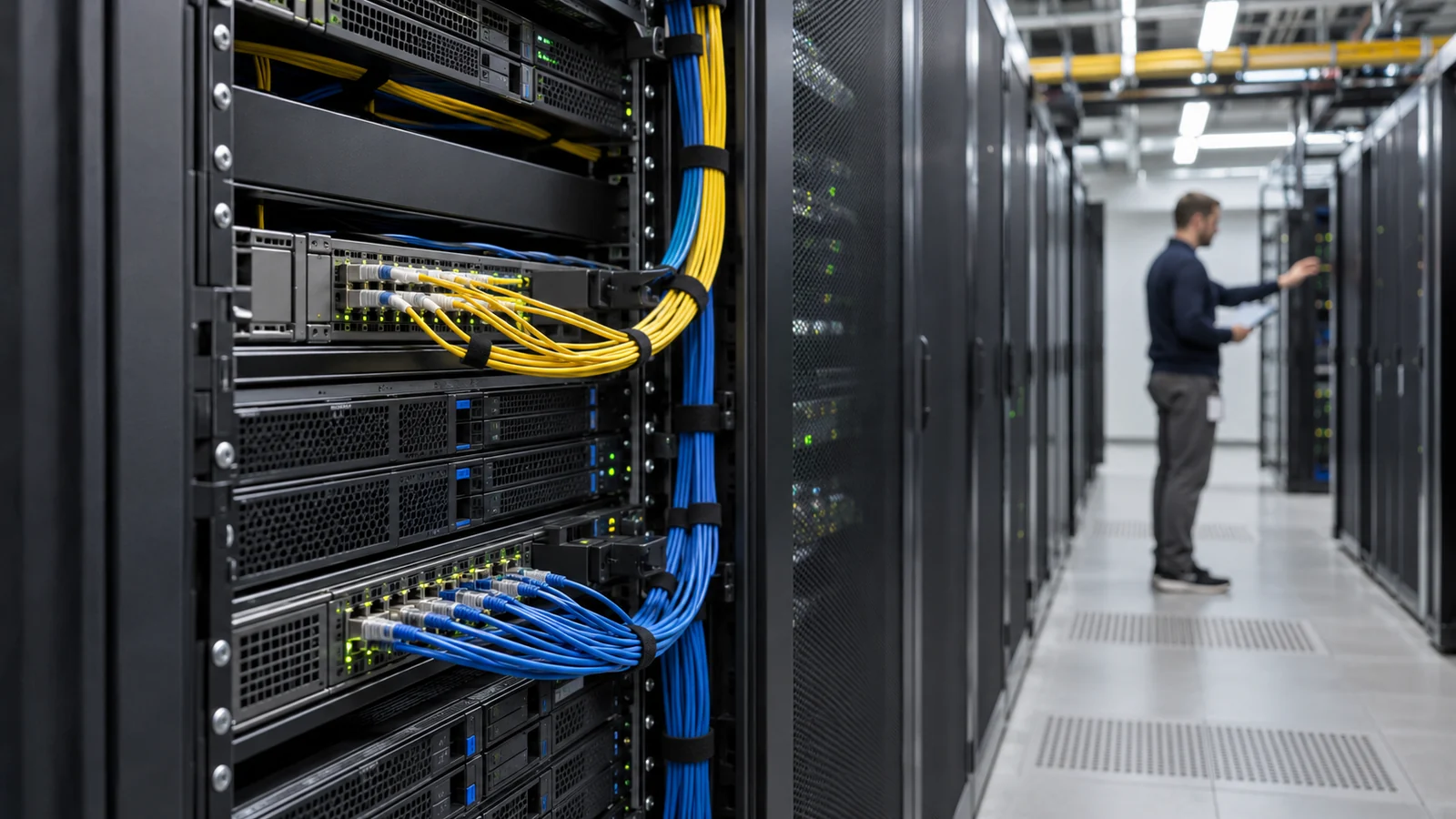
Three purchases have different responsibilities:
- Data feed or API: structured event information, statistics, odds or other defined outputs delivered to the customer's software. The customer still builds and operates its own workflow.
- Betting platform: technology supporting a broader sportsbook operation, potentially including setup and ongoing access. Sportradar's accounts distinguish implementation fees from continuing platform fees.
- Managed service: a human-and-software operating arrangement, such as MTS, where the supplier undertakes specified trading or risk-management functions.
The choice affects staffing, integration, risk governance and commercial terms.
As for Sportradar API pricing, no single current public list price covering the entire catalogue was verified in the sources used here. That is a limit of this research, not evidence that every API must be individually negotiated or that no individual package has a displayed price. A buyer should check the exact product's current official listing and commercial terms. We do not publish guessed monthly fees, trial allowances or private contract quotes.
Why technology and sports rights matter economically

Technology needs lawful content access; rights need collection, validation and reliable delivery to become usable products.
Sports rights require renewals and licence expenditure; software requires ongoing investment. FY2025 sports-rights expense was approximately €404.3 million, including amortisation. This is an accounting expense, not IMG ARENA's purchase price or a cash-payment total.
Some rights licences are capitalised and amortised; others are expensed. The Q3 2026 presentation cited about four years' average remaining term for selected major rights contracts. That is not a portfolio-wide expiry figure.
The same licensed inputs can support statistics, odds, video, trackers and predictive models. This multiplies uses but leaves exposure to renewal terms and product performance.
AI is a tool within that system, not a substitute for the system. Sportradar describes examples such as Alpha Odds for pricing, 4Sight visualisations and VAIX personalisation technology. These illustrate different tasks - adjusting odds, presenting play and analysing customer behaviour - but they do not prove a universal improvement in bookmaker profitability. Vendor-reported uplifts need their stated comparison, period and sample before they can be generalised.
Deep integration also increases the consequences of service failures: uptime, security and data accuracy become critical.
Prediction markets and Playradar: new ways to monetise

Prediction-market businesses offer another potential customer category for Sportradar's data and infrastructure. In June 2026, Sportradar announced a global data-and-technology partnership with Kalshi. In August 2026, it announced an expanded relationship with Polymarket, including sports data, streaming and integrity services across more than 20 competitions.
The 3 November 2026 results also referred to agreements with market makers and brokers. That shows an ambition to serve more than one point in the prediction-market supply chain: exchanges, liquidity providers and intermediaries can require different information or technical infrastructure. Supplying those organisations does not make Sportradar the owner or operator of their exchanges. Nor do the announcements disclose a separate, audited revenue line for Kalshi or Polymarket that would let us calculate the margin of this opportunity.
Playradar represents a different extension. Announced in March 2026, it is Sportradar's B2B iGaming brand intended to combine sports data and streaming with casino-style products. The November investor presentation described a 24/7 sports-and-casino experience and a sports-casino launch as upcoming. The brand announcement is therefore not evidence that every described experience was already live at a named UK casino. Its legal and product identity is examined in our brands, products and subsidiaries guide.
Both initiatives reuse existing capabilities across new customer applications. Neither guarantees a particular contract value, a new revenue segment or permission to offer consumer gambling in every country. For territorial distinctions and permissions, see markets, operators and licences.
The business-model trade-off

My reading is that Sportradar's strength and vulnerability share a source: rights and technology are combined in durable B2B relationships, but earnings are not entirely fixed.
Stand-ready services and subscriptions can help provide continuity. Event bookings and customer usage provide opportunities for additional revenue. Revenue-share arrangements can rise with a client's activity, while MTS loss participation can make recognised earnings sensitive to sporting outcomes. Premium content may create opportunities for several products, but the rights themselves cost money and need renewing.
Q3 2026 disproves the simple assumption that higher betting turnover always lifts supplier revenue. A large data portfolio likewise proves little about margin without contract terms and costs.
The questions I would ask before assessing a new Sportradar product are: Who owns or licenses the underlying input? What service is the client buying? How and when does the supplier earn its fee? Who bears the operational and trading downside? Those four answers reveal more about the Sportradar business model than another list of partners or products. Further uncertainty belongs in our business risks and opportunities analysis.